
When Does Hair Loss Reach the Point Where a Hair Transplant Becomes a Practical Option?
Introduction
Hair loss often begins gradually, making it difficult for individuals to determine when simple hair care measures are no longer enough. Some people notice a slowly receding hairline, while others experience thinning at the crown or a reduction in overall hair density. As these changes progress, many individuals begin exploring long-term restoration options and searching for information about the best hair transplant in Ahmedabad, Gujarat. However, the most important question is not where the procedure is performed, but whether a person is actually an appropriate candidate for surgical hair restoration.
Hair transplantation is a medical procedure designed to redistribute healthy hair follicles from donor areas to regions affected by thinning or baldness. While it can provide natural-looking and long-lasting improvements in suitable candidates, it is not the right solution for every type of hair loss. Understanding when a transplant becomes a practical option requires a closer look at the causes of hair loss, follicle health, and long-term expectations.
Hair Loss Progression and Why Timing Matters
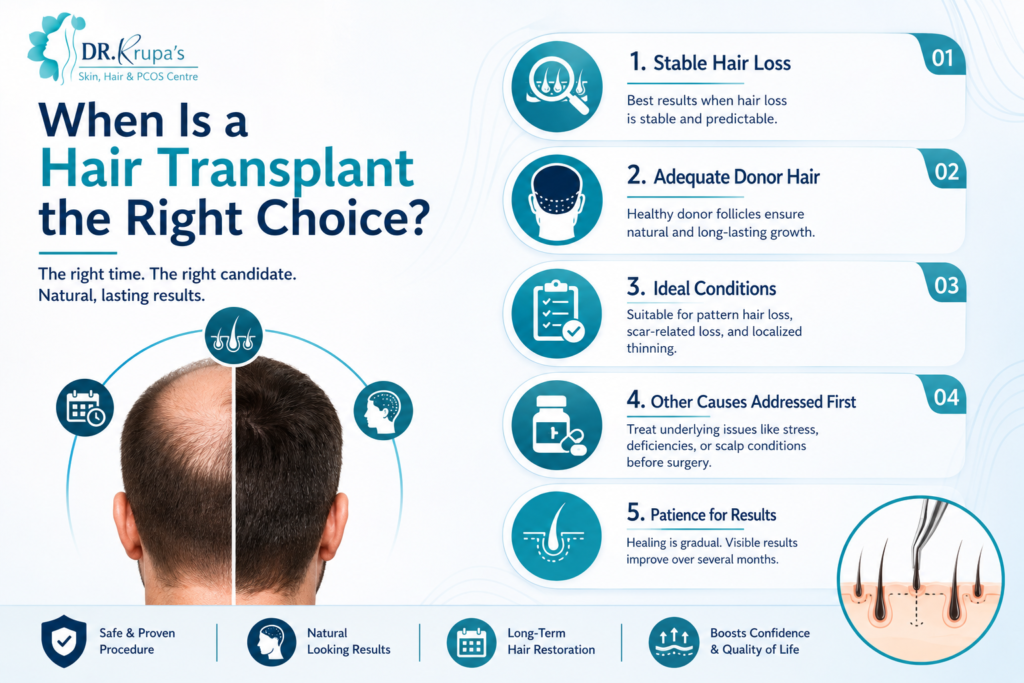
The decision to consider a hair transplant is often influenced by the stage and stability of hair loss. Hair thinning can progress differently from one person to another, making individual assessment essential.
In the early stages, many follicles remain active even though hair strands may appear thinner. Medical treatments, nutritional support, and scalp therapies may help preserve existing hair during this period. Surgical intervention is generally considered when hair loss becomes more noticeable, stable, and less responsive to conservative management.
Performing a transplant too early may create challenges if hair loss continues to progress significantly after surgery. A balanced treatment plan often considers both current hair density and the likelihood of future thinning.
Understanding the Role of Donor Hair
One of the most important factors in hair transplantation is the availability of healthy donor hair. Hair follicles are typically harvested from areas of the scalp that are genetically resistant to hair loss, most commonly the back and sides of the head.
Why Donor Quality Matters
The success of transplantation depends on the characteristics of the donor area. Thick, healthy follicles generally provide better coverage and cosmetic outcomes than weaker or sparse donor hair.
Since donor follicles are a finite resource, careful planning is necessary. Surgeons must consider not only current hair loss patterns but also future changes that may occur over time.
Not Everyone Has the Same Donor Capacity
Individuals vary significantly in donor density. Some patients have a large reserve of healthy follicles available for transplantation, while others may have limited donor supply. This difference can influence the extent of restoration that can realistically be achieved.
Conditions That May Be Suitable for Hair Transplantation
Hair transplantation is most commonly associated with androgenetic alopecia, often referred to as male or female pattern hair loss. However, suitability depends on more than the diagnosis alone.
Male Pattern Hair Loss
Men with stable hair loss and clearly defined thinning areas are frequently evaluated for transplantation. The procedure can help restore hairlines, improve crown density, and address visible scalp exposure.
Female Pattern Hair Loss
Women experiencing localized thinning may also be candidates in certain situations. However, treatment planning often differs because female hair loss patterns can be more diffuse than those seen in men.
Scar-Related Hair Loss
Some individuals experience permanent hair loss following injuries, burns, or surgical scars. In carefully selected cases, transplantation may help improve hair coverage in these affected areas.
Situations Where Alternative Treatments May Be Considered First
Not every patient with thinning hair requires immediate surgical intervention. Identifying the cause of hair loss remains a critical step before considering transplantation.
Temporary Hair Shedding Conditions
Stress-related shedding, nutritional deficiencies, thyroid disorders, and certain medical conditions can trigger temporary hair loss. Addressing these underlying factors may lead to improvement without surgery.
Active Inflammatory Scalp Disorders
Conditions that cause ongoing scalp inflammation may affect transplanted follicles and existing hair. Stabilizing the scalp environment is often necessary before any surgical procedure is considered.
Rapidly Progressing Hair Loss
Patients experiencing aggressive or unstable hair loss may benefit from medical management before surgery. Stabilization helps create a more predictable foundation for long-term planning.
What Happens During a Hair Transplant Procedure?
Hair transplantation involves relocating healthy follicles from donor areas to recipient sites. Modern techniques focus on preserving follicular integrity while creating natural-looking hair growth patterns.
Individual follicles or small follicular units are carefully harvested and implanted according to the patient’s hair characteristics, facial structure, and long-term restoration goals.
The procedure is typically performed under local anesthesia, allowing patients to remain comfortable while avoiding the risks associated with general anesthesia.
Although the surgery itself is completed in a single session or a series of planned sessions, the growth process continues for many months afterward.
Recovery Is Often More Gradual Than Patients Expect
One of the most common misconceptions about transplantation is the expectation of immediate visible results. Hair restoration follows a biological timeline that cannot be rushed.
The Initial Healing Phase
During the first few weeks, small scabs may form around implanted follicles. Mild redness, swelling, or tenderness can occur but generally improve as healing progresses.
Temporary Shedding After Surgery
Many transplanted hairs enter a resting phase and shed shortly after the procedure. This temporary shedding is a normal part of the follicular cycle and does not indicate treatment failure.
New Growth Requires Patience
Visible growth usually develops gradually over several months. Full maturation of transplanted hair often takes a year or longer, depending on individual biological factors.
For individuals researching the best hair transplant in Ahmedabad, Gujarat, understanding this timeline is important because realistic expectations play a significant role in overall satisfaction.
Factors That Influence Long-Term Results
Hair transplantation can provide durable outcomes, but several factors affect the final appearance.
Hair Characteristics
The thickness, color, texture, and natural curl of hair influence coverage and density. Certain hair types may create the appearance of greater fullness even when the number of transplanted follicles is similar.
Extent of Existing Hair Loss
Patients with extensive baldness often require careful planning to maximize available donor resources. In some cases, achieving complete coverage may not be possible due to donor limitations.
Future Hair Loss Progression
Transplanted follicles generally retain their genetic resistance to hair loss. However, surrounding native hair may continue thinning over time. This possibility highlights the importance of long-term management strategies.
Safety Considerations Before Choosing Surgery
Hair transplantation is considered a medical procedure and should be approached with the same level of consideration as any other surgical treatment.
Patients should undergo a thorough evaluation that includes medical history, scalp assessment, and discussion of treatment goals. Existing health conditions, medications, smoking habits, and scalp health can all influence surgical planning and recovery.
Potential risks may include infection, temporary swelling, scarring, altered sensation, or uneven growth patterns. Although serious complications are uncommon when procedures are performed appropriately, informed decision-making remains essential.
Understanding both benefits and limitations helps patients make choices based on realistic expectations rather than marketing claims.
Why Personalized Treatment Planning Matters
Successful hair restoration is not determined solely by the procedure itself. Careful planning is often the factor that most strongly influences natural-looking outcomes.
Every patient has unique facial features, hair characteristics, donor capacity, and long-term hair loss patterns. This is one reason why individuals searching for the best hair transplant in Ahmedabad, Gujarat should focus on comprehensive evaluation and personalized treatment planning rather than comparing procedures based solely on cost or popularity.
Hairline design, graft distribution, density targets, and future hair loss projections all require individualized consideration. The goal is not simply to add hair but to create results that remain balanced and appropriate over time.
Maintaining Results After Hair Restoration Surgery
Hair transplantation addresses areas affected by permanent hair loss, but long-term hair management often continues after the procedure. While transplanted follicles are generally resistant to the hormonal factors responsible for pattern baldness, existing non-transplanted hair may continue to thin over time. For this reason, many patients benefit from ongoing monitoring of scalp health and hair density.
Post-procedure care may include maintaining a healthy lifestyle, addressing nutritional deficiencies, managing stress levels, and following medical recommendations designed to support existing hair. Regular follow-up assessments can help identify early changes in hair growth patterns and allow timely intervention when needed. A long-term approach focused on preserving both transplanted and existing hair often contributes to more balanced and natural-looking results over the years.