
Can PRP Therapy Help Restore Hair Growth Naturally?
Why Hair Thinning Has Become a Growing Concern
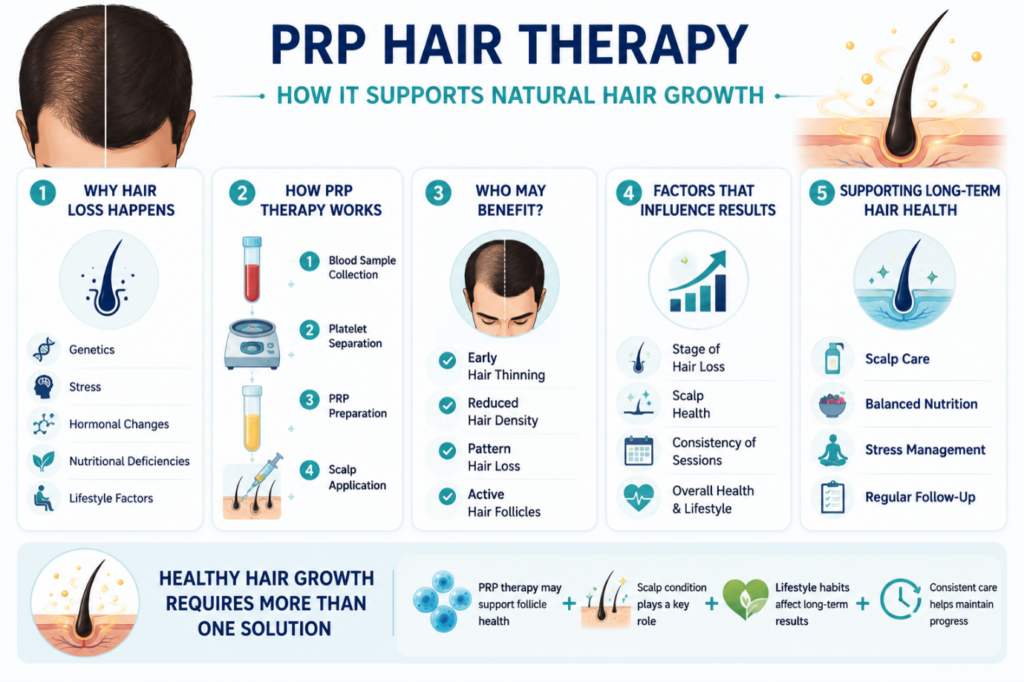
Hair loss affects both men and women across different age groups and can occur due to genetics, hormonal changes, nutritional deficiencies, stress, medical conditions, and lifestyle factors. While losing some hair daily is considered normal, excessive shedding, thinning hair, or a widening scalp line may indicate an underlying issue that requires attention.
As awareness about non-surgical hair restoration continues to grow, many individuals are exploring modern treatments that focus on preserving and strengthening existing hair. Among the available options, PRP hair treatment in Ahmedabad, Gujarat has gained attention because it uses the body’s own biological components to support hair follicle health and stimulate natural growth processes.
Understanding how PRP works, who may benefit from it, and what realistic outcomes to expect can help individuals make informed decisions about hair restoration.
The Science Behind Platelet-Rich Plasma Therapy
PRP stands for Platelet-Rich Plasma, a concentrated component derived from a person’s own blood. Platelets contain growth factors and proteins that play an important role in tissue repair, healing, and cellular regeneration.
During PRP therapy, a small blood sample is collected and processed to separate the platelet-rich portion from other blood components. This concentrated plasma is then carefully introduced into targeted areas of the scalp where hair thinning is present.
The objective is to create an environment that supports healthier hair follicles and encourages natural hair growth cycles. Because the treatment utilizes the patient’s own blood components, it is often viewed as a biologically based approach to hair restoration.
What Happens Inside the Hair Growth Cycle
To understand the potential role of PRP, it is helpful to understand how hair grows. Hair follicles naturally cycle through phases of growth, transition, rest, and shedding.
When factors such as genetics, hormones, inflammation, or stress disrupt this cycle, follicles may gradually produce thinner and weaker strands. Over time, some follicles become less active and remain in prolonged resting phases.
PRP therapy is designed to support follicular activity by delivering growth factors directly to the scalp. These biological signals may help improve blood supply around follicles and encourage healthier growth conditions. Although individual responses vary, the treatment aims to strengthen existing hair rather than create entirely new follicles.
Situations Where PRP May Be Considered
PRP therapy is often explored by individuals experiencing early to moderate hair thinning. It may be considered when hair follicles are still active but producing weaker strands than before.
People who notice increased hair shedding, reduced density, gradual thinning around the crown, or widening hair part lines may discuss PRP as a potential option during professional evaluation.
The treatment is commonly considered for androgenetic hair loss, often referred to as pattern hair loss. Some individuals also explore PRP as part of a broader hair restoration plan designed to support scalp health and improve hair quality.
Because hair loss can result from many different causes, identifying the underlying reason remains an important step before selecting any treatment approach.
Factors That Influence Treatment Outcomes
Results from PRP therapy are not identical for every individual. Several factors can influence how the scalp responds to treatment.
The stage of hair loss plays a major role. Individuals with active follicles generally have a greater opportunity for improvement compared with those experiencing advanced follicular loss. Age, genetics, hormonal influences, overall health, nutritional status, and scalp condition may also affect outcomes.
Consistency is another important consideration. Hair growth occurs gradually, and visible changes often require time. Multiple sessions may be recommended depending on the individual’s condition and treatment goals.
Patients considering PRP hair treatment in Ahmedabad, Gujarat should understand that treatment plans are usually customized according to hair loss patterns and scalp health assessments.
Separating Expectations From Common Misconceptions
One common misconception is that PRP therapy produces immediate hair growth. In reality, hair follicles require time to respond to biological stimulation, and improvements generally occur gradually.
Another misunderstanding is that PRP works equally well for every type of hair loss. Certain conditions may require different treatment approaches or additional medical management. This is why accurate diagnosis remains important before beginning therapy.
Some individuals also assume that PRP can completely reverse advanced baldness. While the treatment may support existing follicles, it is not always capable of restoring areas where follicles are no longer active.
Having realistic expectations helps individuals evaluate treatment options more effectively and avoid disappointment caused by inaccurate assumptions.
The Role of Scalp Health in Hair Restoration
Healthy hair growth begins with a healthy scalp. Inflammation, poor circulation, excessive oil production, buildup, and certain scalp conditions can affect follicular function over time.
Professional assessment often includes evaluation of scalp condition because underlying issues may influence treatment response. Improving scalp health may help create a more favorable environment for stronger hair growth.
Regular scalp care, gentle cleansing routines, balanced nutrition, and proper management of underlying conditions may complement hair restoration strategies and contribute to better long-term outcomes.
Combining PRP With Comprehensive Hair Care
Hair restoration is rarely dependent on a single factor. Many individuals benefit from a broader approach that addresses lifestyle, nutrition, scalp care, and medical evaluation alongside treatment procedures.
Stress management may be particularly important because chronic stress can influence hair growth cycles and increase shedding. Adequate sleep, balanced dietary habits, and maintaining overall wellness may also support healthier hair function.
For some individuals, PRP therapy becomes one component of a larger long-term strategy focused on preserving hair density and slowing progression of thinning.
Important Considerations Before Making a Decision
Before choosing any hair restoration procedure, it is important to understand the underlying cause of hair loss and discuss available options with a qualified healthcare professional.
A detailed assessment can help determine whether PRP is likely to be suitable based on scalp condition, hair loss pattern, medical history, and treatment expectations. Individuals should also understand that hair restoration is often a gradual process that requires patience and consistent follow-up.
Those exploring PRP hair treatment in Ahmedabad, Gujarat frequently seek a non-surgical approach that supports natural hair growth while helping improve overall hair quality and density.
A Long-Term Perspective on Hair Preservation
Hair loss can affect confidence, self-image, and overall well-being, but modern treatment approaches continue to provide new opportunities for managing thinning hair. PRP therapy represents one option that focuses on supporting follicular health through the body’s natural healing mechanisms.
While results vary from person to person, informed decision-making, realistic expectations, and professional guidance remain essential parts of the treatment journey. By understanding how PRP works and the factors that influence outcomes, individuals can make more confident choices about protecting and maintaining long-term hair health.