
What You Should Know Before Considering a Hair Transplant
Introduction
Hair loss is a concern that affects both men and women and can influence self-image, confidence, and overall wellbeing. While shedding a small amount of hair each day is a normal part of the hair growth cycle, excessive thinning, a receding hairline, or visible bald patches often prompt people to explore long-term solutions. As a result, many individuals researching the best hair transplant in Ahmedabad, Gujarat want to understand whether hair transplantation is an appropriate option and what outcomes they can realistically expect.
Unlike temporary cosmetic approaches that simply conceal hair loss, hair transplantation focuses on redistributing healthy hair follicles from one area of the scalp to another. However, successful treatment involves more than the procedure itself. Factors such as the cause of hair loss, donor hair availability, scalp health, age, and future hair-loss progression all play important roles in determining suitability and long-term results.
Why Hair Loss Happens Differently for Different People
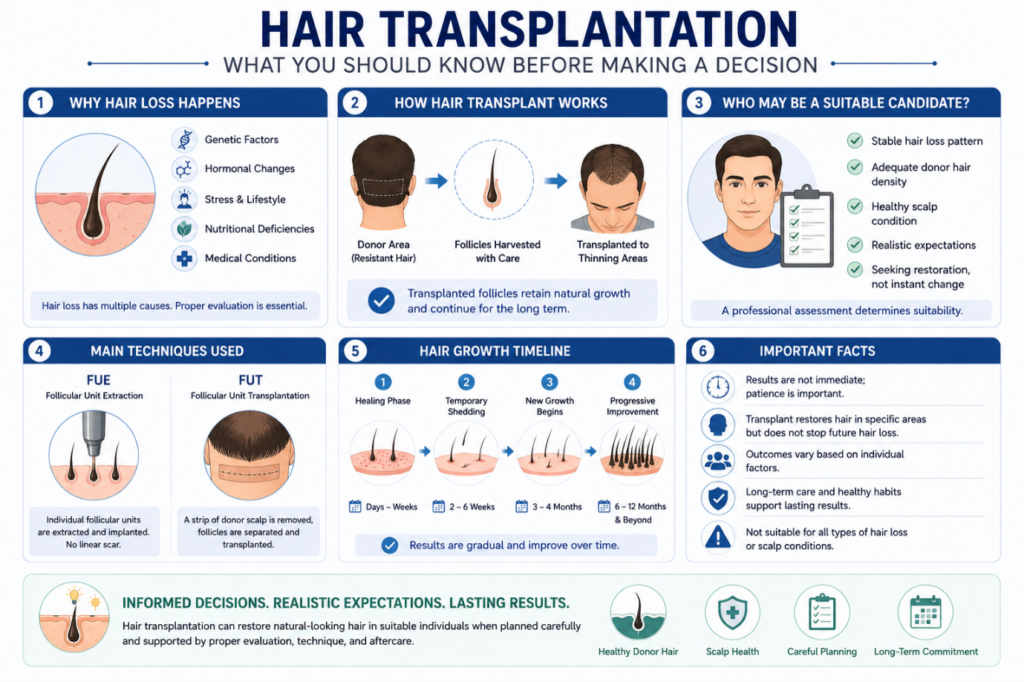
Hair loss is not a single condition. Multiple biological and environmental factors can contribute to thinning hair, making proper evaluation an important first step before considering treatment.
Common causes include:
- Genetic hair loss patterns
- Hormonal changes
- Increasing age
- Nutritional deficiencies
- Stress-related shedding
- Certain medical conditions
- Medication-related hair loss
- Autoimmune disorders affecting hair follicles
Understanding the underlying cause of hair loss helps determine whether transplantation or another treatment approach may be more appropriate.
The Hair Follicle Advantage Behind Hair Transplantation
One of the reasons hair transplantation can provide long-term improvement is related to the characteristics of donor hair follicles.
Hair is typically harvested from areas of the scalp that are genetically more resistant to pattern hair loss, often located at the back or sides of the head. When these follicles are carefully relocated to thinning areas, they generally retain many of their original growth characteristics.
This principle forms the foundation of modern hair restoration procedures.
Looking Beyond Baldness: Who May Be a Suitable Candidate?
Not everyone experiencing hair loss is automatically a candidate for transplantation. A thorough assessment is necessary to evaluate both current hair loss and future expectations.
Individuals may be considered suitable when they:
- Have stable hair loss patterns
- Possess adequate donor hair density
- Maintain realistic expectations
- Have healthy scalp conditions
- Are seeking restoration rather than instant transformation
Suitability depends on individual circumstances, making personalized assessment an important part of treatment planning.
Understanding the Main Approaches Used in Hair Restoration
Modern hair transplantation techniques aim to achieve natural-looking hair distribution while minimizing disruption to surrounding tissues.
Follicular Unit Extraction (FUE)
This technique involves harvesting individual follicular units from the donor area before implanting them into areas experiencing hair loss. It is widely used because it avoids the removal of a large strip of scalp tissue.
Follicular Unit Transplantation (FUT)
This method involves removing a strip of donor scalp from which follicular units are carefully separated and transplanted. The technique may be considered in certain situations depending on donor requirements and treatment goals.
The most appropriate method depends on scalp characteristics, hair density, treatment objectives, and professional evaluation.
What Happens During the Hair Growth Timeline After Treatment?
One of the most misunderstood aspects of hair transplantation is the timeline for visible results.
Immediately after transplantation, newly placed follicles enter a healing and adaptation phase. It is common for transplanted hairs to shed during the initial weeks. This temporary shedding is usually a normal part of the process and does not indicate treatment failure.
Over the following months, new hair growth gradually begins as transplanted follicles establish themselves within their new location. Because hair grows slowly, noticeable improvements typically develop progressively rather than overnight.
Factors That Influence Hair Transplant Outcomes
The final appearance following hair transplantation can be affected by several variables.
Important considerations include:
- Donor hair quality
- Hair texture and thickness
- Extent of hair loss
- Scalp condition
- Age-related progression
- Overall health status
- Post-procedure care
- Long-term hair preservation strategies
Understanding these factors helps create realistic expectations regarding density and coverage.
Common Concerns People Have Before Treatment
Individuals considering transplantation often share similar concerns regarding the procedure and its results.
Will the New Hair Look Natural?
Modern transplantation techniques are designed to replicate natural hair growth patterns, angles, and density distribution.
Is Hair Loss Completely Cured?
Hair transplantation restores hair to specific areas but does not stop future hair loss from occurring in untreated follicles.
Are Results Immediate?
Hair restoration is a gradual process. New growth develops over time as transplanted follicles progress through natural growth cycles.
Can Women Undergo Hair Transplantation?
In selected cases, women experiencing specific forms of hair loss may also be candidates for hair restoration procedures.
Important Limitations That Should Be Understood
Hair transplantation can provide meaningful improvement, but it is not suitable for every type of hair loss.
Certain conditions involving active scalp disease, widespread donor-area depletion, or ongoing inflammatory hair loss may require alternative management approaches before transplantation is considered.
Recognizing limitations is an important part of making an informed treatment decision.
Making an Informed Decision About Hair Restoration
Individuals exploring the best hair transplant in Ahmedabad, Gujarat are often seeking a lasting solution for thinning hair and baldness. While modern hair transplantation offers advanced techniques capable of restoring hair in suitable candidates, successful outcomes depend on careful evaluation, realistic expectations, donor hair availability, and long-term planning.
Understanding how hair transplantation works, who may benefit, what factors influence results, and how the growth process unfolds can help individuals approach treatment decisions with greater confidence. Rather than viewing transplantation as a quick cosmetic fix, it is best understood as a medically guided hair restoration strategy tailored to individual hair-loss patterns and goals.