
Could Irregular Periods Be a Sign of PCOD?
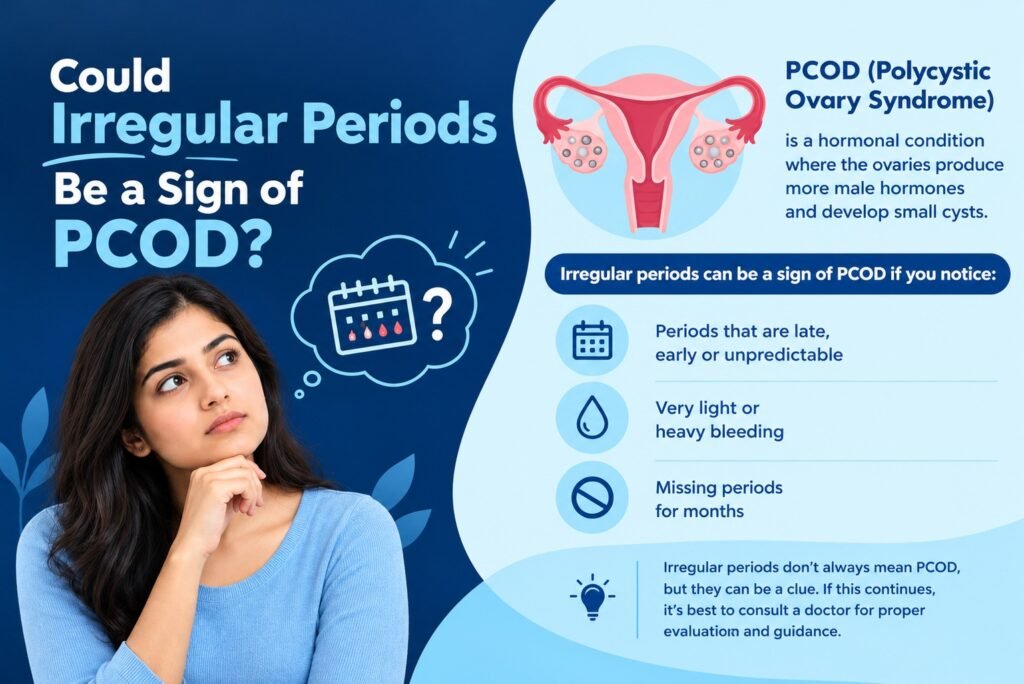
Introduction
You’ve missed your period again. Or it showed up three weeks late, then twice in one month. You might have brushed it off as stress, but a small voice keeps asking, “Is something wrong?”
If this sounds familiar, you’re not alone. Irregular periods are one of the most common reasons women walk into a PCOD treatment,. Sometimes the cause is simple. Sometimes it’s PCOD. The only way to know is to understand the signs and get checked.
What Is PCOD, and Why Is It So Common?
PCOD stands for Polycystic Ovarian Disease. In simple words, the ovaries release immature or partly mature eggs, and these can form small fluid-filled sacs (follicles) over time. The hormones that control your cycle get thrown off balance.
It is very common. Studies suggest roughly one in five women in India may be affected. Most of them are between their teens and mid-thirties, which means you are far from the only one dealing with this.
How Do I Know If My Periods Are Irregular?
A “normal” cycle usually runs 21 to 35 days, counted from the first day of one period to the first day of the next. Your cycle may count as irregular if:
- Your periods come less often than every 35 days
- You have fewer than 8 to 9 periods in a year
- Your gap between periods keeps changing
- Your bleeding is unusually heavy, very light, or lasts much longer than usual
- You skip periods for months without being pregnant
One odd cycle after a stressful month is usually nothing to worry about. A pattern that continues is worth a conversation with a doctor.
Why Does PCOD Cause Irregular Periods?
Think of your cycle as an orchestra. Hormones need to play in sync for an egg to mature and be released each month.
In PCOD, this balance slips. The body may make a little extra of the “male” hormones called androgens, which every woman has in small amounts. Many women also have insulin resistance, meaning the body doesn’t respond well to insulin and produces more of it.
The result? Eggs don’t mature or release on schedule. Ovulation becomes unpredictable, and so do your periods.
What Other Symptoms Should I Look For?
Irregular periods rarely travel alone. Watch for these signs as well:
- Acne that keeps coming back, especially along the jawline
- Extra hair on the face, chest, or belly
- Thinning hair on the scalp
- Weight gain, especially around the waist
- Dark, velvety patches of skin on the neck or underarms
- Difficulty getting pregnant
- Mood changes, low energy, or feeling low
You may have only a few of these. Every woman’s experience with PCOD is different.
Can Something Else Cause Irregular Periods?
Yes, and this is important. PCOD is a common cause, but not the only one. Other possibilities include:
- Thyroid problems
- High levels of prolactin, a hormone linked to milk production
- Sudden weight loss or gain
- Heavy exercise or crash dieting
- Ongoing stress or poor sleep
- Perimenopause, the years before menopause
That’s why guessing or self-diagnosing doesn’t help. A proper check-up tells you what’s really going on.
How Is PCOD Diagnosed?
There is no single test. Your doctor will look at the full picture, usually through:
- A conversation: your cycle history, symptoms, and family history
- A physical exam: checking weight, blood pressure, skin, and hair growth
- Blood tests: hormone levels, blood sugar, and thyroid function
- An ultrasound: to look at your ovaries and the lining of the uterus
At a good PCOD treatment clinic in Ahmedabad, Gujarat, the focus should be on listening to you first. Tests support the diagnosis, but your story matters just as much.
What Does PCOD Treatment Involve?
Here’s the reassuring part: PCOD can be managed very well. There is no one-size-fits-all plan, so treatment depends on your age, symptoms, and whether you’re planning a pregnancy.
Lifestyle changes come first. Even a modest amount of weight loss, around 5 to 10 percent for those who are overweight, can help bring periods back on track.
Medicines may be added when needed. These can help regulate cycles, improve insulin response, or reduce acne and unwanted hair. Always take them under a doctor’s guidance.
Fertility support is available for women who want to conceive. Many women with PCOD go on to have healthy pregnancies with the right care and timing.
Dr. Krupa Vyas believes in personalised treatment plans that fit a woman’s real life, not just her reports.
What Can I Do at Home to Support My Cycle?
Small, steady habits work better than strict, short-lived routines.
- Eat balanced meals. Include vegetables, dal, whole grains, and protein. Cut back on sugary drinks and fried snacks.
- Move daily. A 30-minute brisk walk, yoga, or cycling is enough to begin with.
- Sleep well. Aim for 7 to 8 hours. Poor sleep affects hormones.
- Manage stress. Breathing exercises, hobbies, or talking with someone you trust can help.
- Track your periods. A simple app or calendar helps your doctor understand your pattern.
Be kind to yourself. Progress with PCOD is gradual, and every small step counts.
When Should I See a Doctor?
Book an appointment if:
- Your periods have been irregular for more than three months
- You’ve gone three months or more without a period and aren’t pregnant
- You have severe pain or very heavy bleeding
- You’re struggling to conceive after 6 to 12 months of trying
- Acne, hair growth, or weight changes are affecting your confidence
Please don’t wait for things to become “serious.” Early care makes treatment easier and protects your long-term health, including your heart, blood sugar, and fertility.
Final Thoughts
Irregular periods are your body’s way of saying something needs attention. They don’t always mean PCOD, but when they do, the condition is very manageable. You don’t need to figure it out alone or feel embarrassed about asking.
If you’re looking for a caring, experienced PCOD treatment clinic in Ahmedabad, Gujarat, consider booking a consultation with Dr. Krupa Vyas. A simple conversation could give you the answers and peace of mind you’ve been looking for.