
Why Do Dark Spots Suddenly Appear on the Face?
Introduction
You look in the mirror one morning and notice a patch that wasn’t there before. Maybe it’s a brown spot on your cheek, a darker shade above your lip, or uneven tone across your forehead. It’s natural to wonder, “Where did this come from?”
If you’ve been searching for pigmentation treatment, you’re in good company. Dark spots are one of the most common skin concerns we see. The good news is that most of them are harmless and can be improved with the right care.
What Exactly Are Dark Spots on the Face?
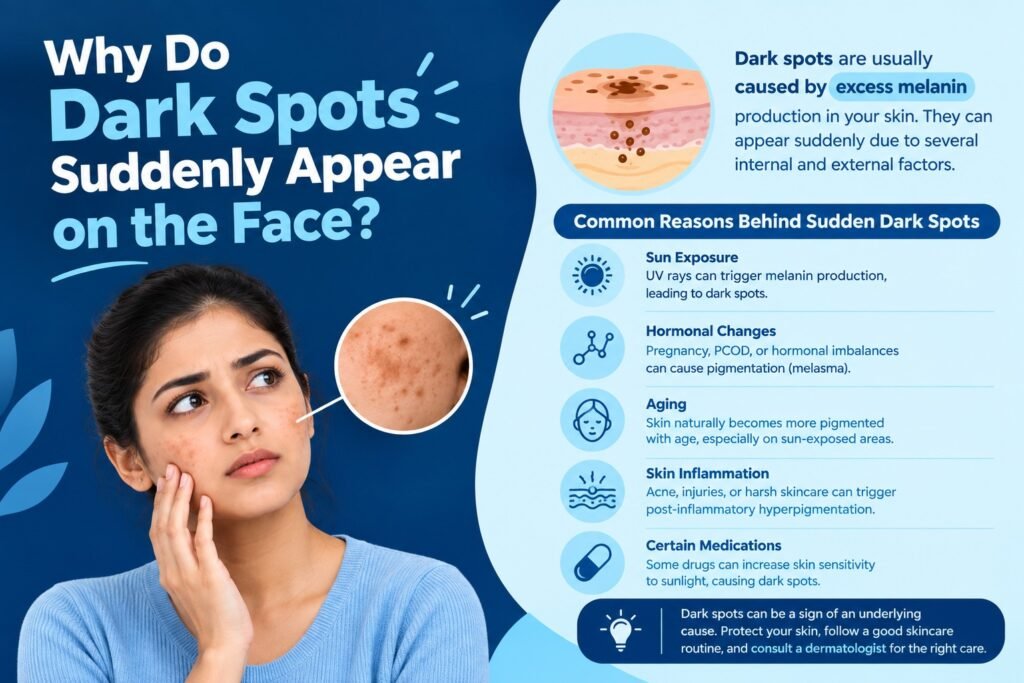
Your skin contains cells called melanocytes. Their job is to make melanin, the pigment that gives your skin its colour and protects it from the sun.
Sometimes these cells become overactive and produce too much melanin in one area. That extra pigment shows up as a dark spot or patch. This is what doctors call hyperpigmentation.
Why Do Dark Spots Suddenly Appear?
They may look sudden, but the trigger has usually been building quietly. Here are the most common causes.
- Sun Exposure
This is the biggest one. Ultraviolet (UV) rays make your skin produce more melanin as a defence. Years of unprotected sun can show up as spots all at once. - Hormonal Changes
Pregnancy, birth control pills, thyroid problems, and PCOD can all stir up pigment. Hormone-linked patches often appear on the cheeks, forehead, and upper lip. - Acne and Skin Injury
After a pimple, scratch, or burn heals, it can leave a dark mark behind. Picking at pimples makes this much more likely. - Skincare Products and Medicines
Some fragrances, harsh scrubs, or home remedies like lemon juice can irritate skin and leave marks. A few medicines also make the skin more sensitive to sunlight. - Stress, Sleep, and Nutrition
Long-term stress, poor sleep, and low levels of vitamin B12 or iron can affect skin health. They rarely cause spots alone, but they can make existing pigmentation worse.
What Are the Common Types of Pigmentation?
Knowing the type helps your doctor choose the right treatment.
- Sun spots (solar lentigines): Flat, brown spots on areas that get the most sun
- Melasma: Larger, symmetrical patches on the cheeks, nose, or forehead, often linked to hormones
- Post-inflammatory pigmentation: Dark marks left after acne or skin irritation
- Freckles: Small, light brown dots that often darken in summer
Can Dark Spots Be a Warning Sign?
Most are harmless. But a few situations deserve a doctor’s attention:
- A spot that grows quickly, has uneven edges, or has multiple colours
- A patch that itches, bleeds, or becomes raised
- A dark spot that looks very different from your other spots
- Dark, velvety patches on the neck or underarms, which may point to insulin or hormonal issues
Please don’t panic if you notice one of these. Just get it examined. Early checks bring peace of mind.
What Is the Best Pigmentation Treatment in Ahmedabad?
There’s no single “best” option, because the right choice depends on your skin type, the kind of pigmentation, and how deep it sits. A proper skin assessment comes first.
Treatment options may include:
- Prescription creams: Ingredients like hydroquinone, vitamin C, niacinamide, or azelaic acid help lighten spots gradually
- Chemical peels: Gentle medical-grade peels remove the top layer of dull, pigmented skin
- Laser and light-based treatments: Useful for stubborn spots when done by a trained doctor
- Treating the root cause: Managing thyroid issues, hormones, or acne often helps pigmentation fade
Be patient. Visible change usually takes several weeks, and sometimes a few months. Anyone promising overnight results is not being honest with you.
Dr. Krupa focuses on understanding why your pigmentation appeared, then building a plan suited to your skin and lifestyle.
How Can I Prevent New Dark Spots?
Prevention is simpler than most people expect.
- Use sunscreen daily. Choose SPF 30 or higher, and reapply every two to three hours if you’re outdoors.
- Cover up. Wear a hat, sunglasses, or a dupatta when riding or walking in the sun.
- Don’t pick pimples. Treat acne early instead.
- Go gentle. Skip harsh scrubs and unverified home remedies.
- Keep your skin moisturised. Healthy skin repairs itself better.
- Eat well and sleep well. Your skin reflects your overall health.
When Should I See a Doctor?
Consider booking a consultation if:
- Spots are spreading or darkening despite your efforts
- Home remedies or store-bought creams aren’t helping
- You’re unsure what type of pigmentation you have
- The spots are affecting your confidence or daily comfort
- You notice any changes in a spot’s shape, colour, or texture
Your skin concerns are valid, even if others say “it’s just a few spots.”
Final Thoughts
Dark spots can feel frustrating, especially when they appear without warning. But they are common, usually harmless, and very treatable when you know the cause.
If you’re looking for reliable pigmentation treatment in Ahmedabad, you can book a consultation with Dr. Krupa. A careful skin check and an honest conversation can set you on the right path toward clearer, healthier skin.